Wave energy is not widely used because a figure for energy in the water is a different kind of evidence from a machine that stays in service. On 18 September 2024, the U.S. Department of Energy’s Hydropower and Hydrokinetic Office published a funding notice that says wave energy is not yet widely deployed across the country. In the same paragraph it says the total available wave energy resource in the United States is equivalent to approximately 34% of all U.S. power generation.
Keep four records separate: the resource, a prototype tested in the water, an open-water test of power, survivability and reliability, and a system crews can install and maintain. The Department of Energy’s Technology-Specific System Design and Validation page, as retrieved on 11 October 2026, names the conditions between those records: deep water, high pressure, corrosive seawater, extreme weather, and sites far from the ships and ports already on the coast.
Ocean Energy Notes compiled this page from those two public documents. It is not an assessment of a project, a permit, or an investment. How waves carry power, and how converter types differ, is already set out in wave energy explained.
Key points
- The 34% comparison is a resource statement. It is not a count of electricity delivered.
- Prototype testing, including in-water testing, is the check the design-and-validation page names for performance and reliability.
- For devices meant to serve a grid, the 2024 notice sets the open-water tasks as power, survivability, and reliability.
- Installation, operations and maintenance still have to be possible after the test. The 2024 application deadlines have passed, and this page does not name a year when wave energy becomes ordinary supply.
What does a large wave resource prove?
It proves that the 18 September 2024 notice treated the U.S. wave resource as large next to national generation: approximately 34% of all U.S. power generation. The same paragraph says wave energy is not yet widely deployed. The percentage compares an estimate of energy in the water with generation. The deployment sentence is about machines. One does not complete the other.
The notice states that comparison and does not reprint the table behind it. DOE’s 2021 overview, explained in wave energy explained, reports a technical wave resource equal to 34% of the generation baseline used in that overview. Read each document’s own label before treating the two percentages as the same cell. Waves are also a different motion from tides, which wave energy vs tidal energy separates.
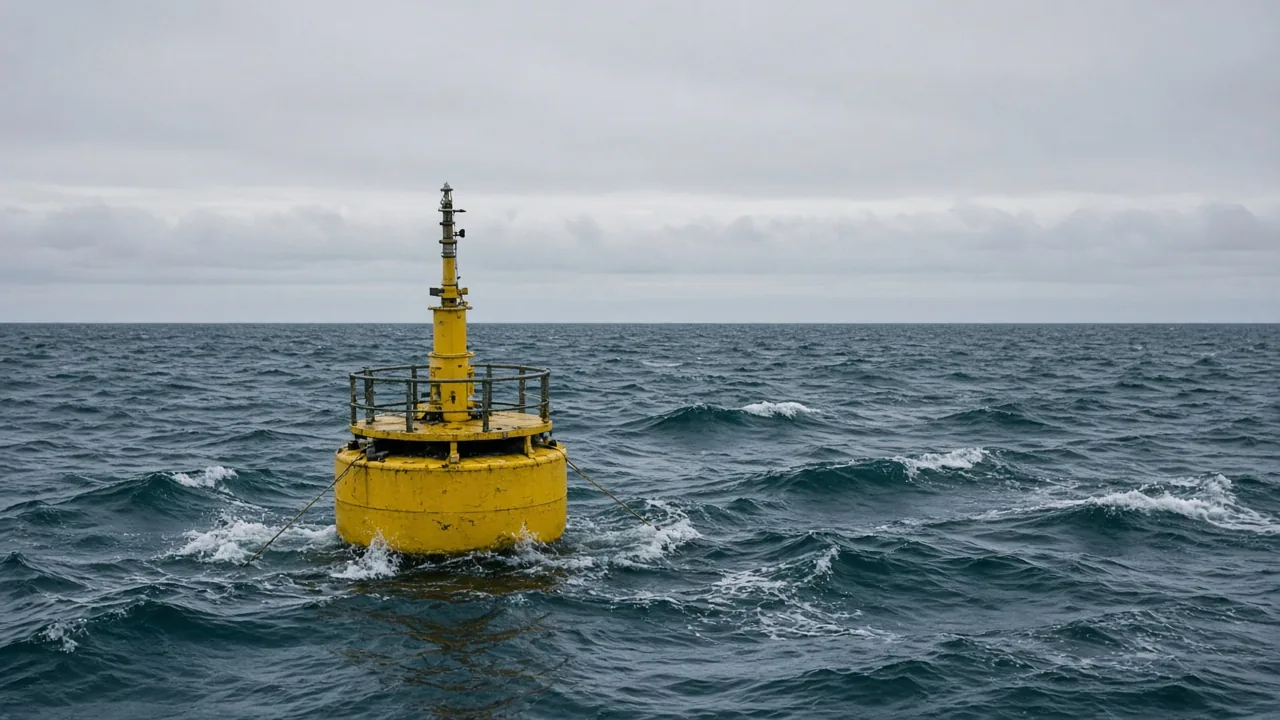
Takeaway: Use the resource figure when the question is how much energy the sea carries. Use operating records when the question is how widely wave energy is used.
What does a prototype test prove?
It proves how a system performed in the test that was actually run. The design-and-validation page says marine energy devices operate in harsh conditions with deep water, high pressure, and corrosive seawater. Extreme weather events can make installing and maintaining many of these technologies even more difficult. Sites can sit far from shore. Using existing ships and port infrastructure to reach those sites, without adapting them for marine energy, can further decrease efficiency and increase costs. The page states that cost effect and does not give a dollar amount. This article does not add one.
The page lists four approaches to those problems:
| Approach, in the page’s words | What you can treat as evidence |
|---|---|
| Validate performance and reliability of systems through prototype testing, including in-water testing | A stated test, in water, of performance and reliability |
| Improve cost-effective methods for installation, operations, and maintenance (I&OM) | A method for putting the device in, running it, and servicing it |
| Support the development and adoption of international standards for device performance and insurance certification | A named standard used for performance or for insurance certification |
| Evaluate existing and potential needs for marine energy-specific IO&M infrastructure | A check on whether vessels, ports and yards can serve this kind of device |
The page uses both “I&OM” and “IO&M” for installation, operations and maintenance. The abbreviations differ. The job they name is the same.
A prototype that generates during an in-water test meets the first approach. It does not, by itself, show that a crew can keep the same machine working at a distant site after the test team leaves. Corrosive seawater is one reason. The page groups it with the conditions that make maintenance part of performance. How coating systems are built for steel in seawater is covered in marine paint for metal. The design-and-validation page does not publish a failure rate, and this page does not invent one.
Takeaway: Ask where the test happened, how long it ran, and which quantity the write-up called reliability.
What do open-water tests have to show?
For devices aimed at a utility grid, the 18 September 2024 notice says topic area 3 “focuses on open water testing for power, survivability, and reliability.” Those are the test tasks. Power asks whether the device produced electricity in the sea states of the test. Survivability asks whether it stayed intact. Reliability asks whether that performance held through the demonstration, rather than for a single favorable interval.
The notice expected longer-duration demonstrations to last six months to two years. That span is a test length written into the 2024 notice. It is not a date by which wave energy becomes widely used. This page does not supply a commercialization date.
The notice described three topic areas. They are different jobs for a device. They are not a ranking of permits or of research projects.
| Topic area | Test job the notice describes |
|---|---|
| 1. Distributed applications | Open-water testing and system validation for devices that, in commercial operation, would not be connected to shore. A shore connection was allowed during testing. The notice’s examples of uses at sea include ocean observation and aquaculture. |
| 2. Community applications | Functional devices for coastal and island communities, including power or desalinated water. The notice emphasizes projects that are not connected to the grid. |
| 3. Utility applications | Open-water testing for power, survivability, and reliability, for devices designed to connect to the grid. |
On the utility topic, the notice says the developer can use PacWave as an open-water test site or propose an alternative grid-connected site. That sentence records the option the notice gave applicants. It is not a finding about a permit, a site, or any project.
The application window is closed. Concept papers were due at 5 p.m. ET on 25 October 2024. Full applications were due at 5 p.m. ET on 6 February 2025. Selection notifications were expected in June 2025. The notice also says funding was subject to congressional appropriations, so the text itself did not guarantee that every described test would be paid for. Use the notice as a statement of the tests. Do not treat it as a current opportunity.
Takeaway: A utility-device claim that skips power, survivability, or reliability has not met the open-water task the 2024 notice wrote down.
What has to be true before a system is maintainable?
Crews have to install it, reach it, and service it after the demonstration team leaves. The design-and-validation page says the marine energy industry is working on the harsh-condition problems in order to increase device reliability and improve access to project financing. The financing clause is the office’s reason for that work. This page does not advise anyone on how to finance a device.
Each condition on the page raises a reliability question, an access question, and a maintainability question. The cells are a reading list tied to the page’s wording. They are not measured rates.
| Condition the page names | Reliability | Access | Maintainability |
|---|---|---|---|
| Deep water, high pressure, and corrosive seawater | The first approach asks for prototype testing of performance and reliability, including in-water testing, in the conditions the page names | Reaching the site is a separate problem from surviving the water once the device is there | Corrosion and pressure are why servicing the device belongs with reliability |
| Extreme weather | Survivability is one of the three open-water test tasks in the utility topic of the 2024 notice | The design page says extreme weather can make installing and maintaining these technologies more difficult | Installation and maintenance sit in that same sentence, so weather is an operations problem as well as a design problem |
| Sites far from shore | The page lists distance beside the sea conditions, so reliability evidence has to match the site that was actually used | Using existing ships and ports without adapting them for marine energy can decrease efficiency and increase costs. No dollar figure is given | The fourth approach is to evaluate whether marine-energy-specific IO&M infrastructure is needed |
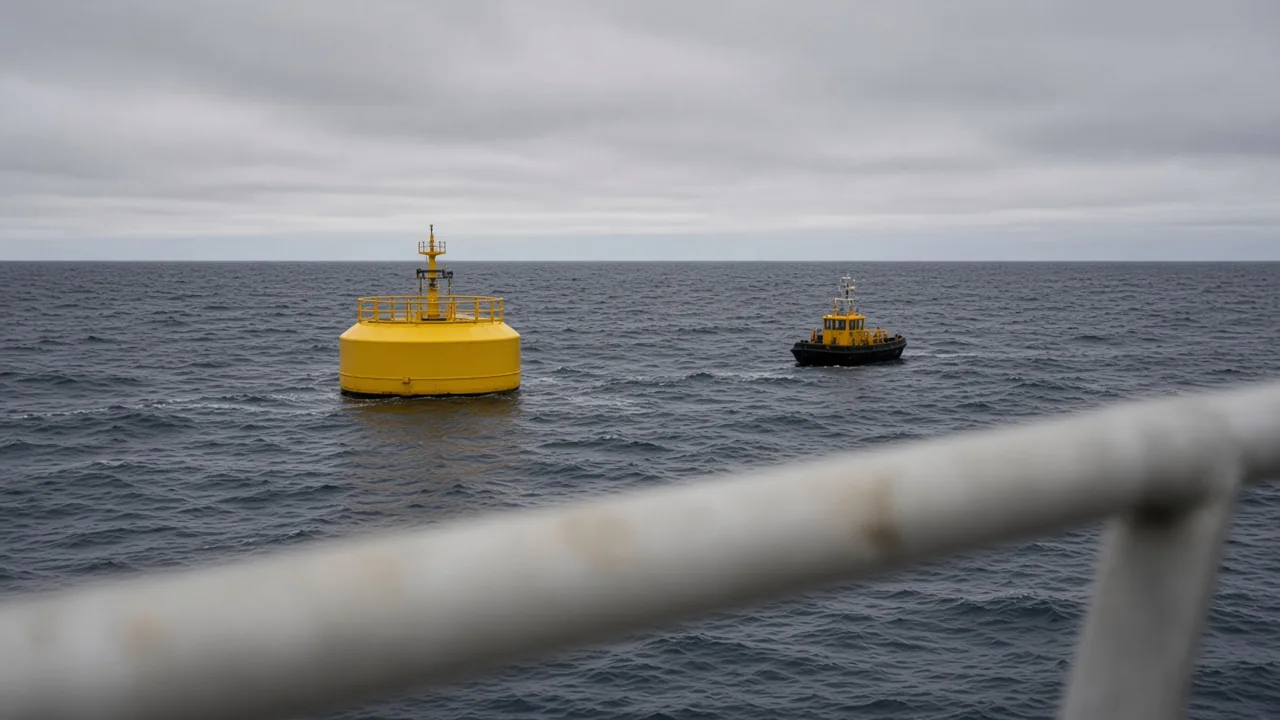
Takeaway: Generation during a test and a system that can be maintained are different evidence. Ask how the crew gets there and what they do when they arrive.
How do you read a claim about wide use?
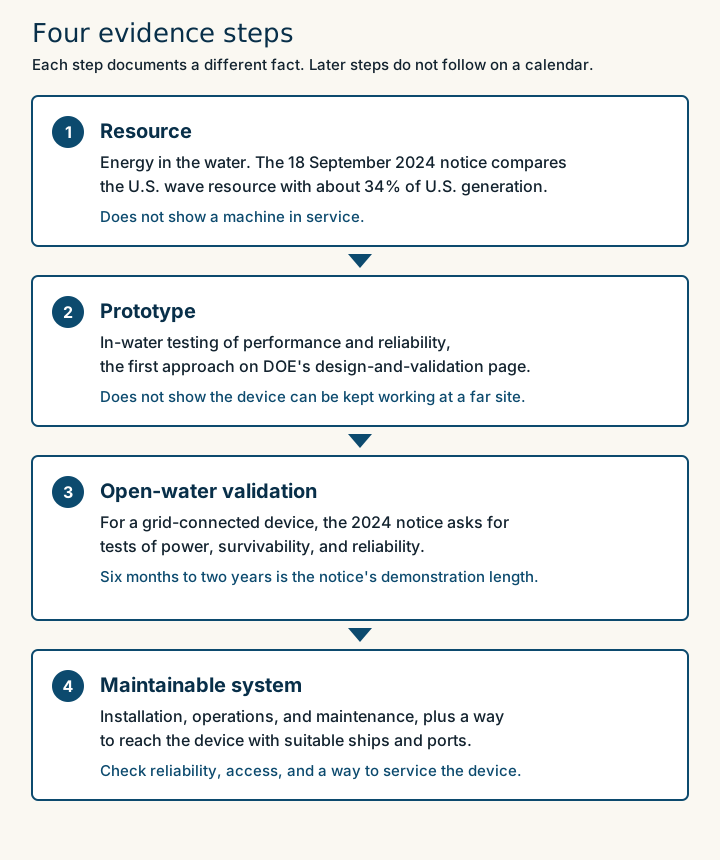
Walk the four steps. Stop at the first step the claim does not document.
| Step | Evidence that belongs here | The claim is early when it only offers |
|---|---|---|
| 1. Resource | A resource figure with its label and its date. In the 2024 notice, the U.S. wave resource is approximately 34% of U.S. power generation | That percentage as electricity already delivered |
| 2. Prototype | Prototype testing, including in-water testing, of performance and reliability | A tank result described as service in the ocean |
| 3. Open-water validation | For a grid-connected device: power, survivability, and reliability. The notice expected demonstrations of six months to two years | A short trial described as if that duration had already been run |
| 4. Maintainable system | Methods for installation, operations and maintenance, and a way to reach the site | A device that generated, with no account of access or servicing |
Common mistake: Offering the 34% resource comparison as electricity already on the grid. The 18 September 2024 notice places that comparison in the same paragraph as “not yet widely deployed.”
Takeaway: If step 3 or step 4 is missing, you are still reading a resource figure or a prototype result.
When this does not apply
- The page does not say wave energy is unused. The notice’s phrase is “not yet widely deployed.”
- It does not rank permits, and it does not score research projects as successes or failures.
- It does not decide a permit or a site. PacWave appears above only because the 2024 notice names it as one test-site option.
- It does not predict a commercialization date. Six months to two years is the demonstration length in that notice.
- It gives no measured failure rate, no universal cost, and no financing advice.
- Ocean Energy Notes is an independent publication. It is not the developer of the former Grays Harbor ocean energy project, and it does not recommend an investment. The About page states that separation.
Takeaway: Use the four-step list on the next claim you read. Site, permit, and money questions belong in the primary documents.
Methods and sources
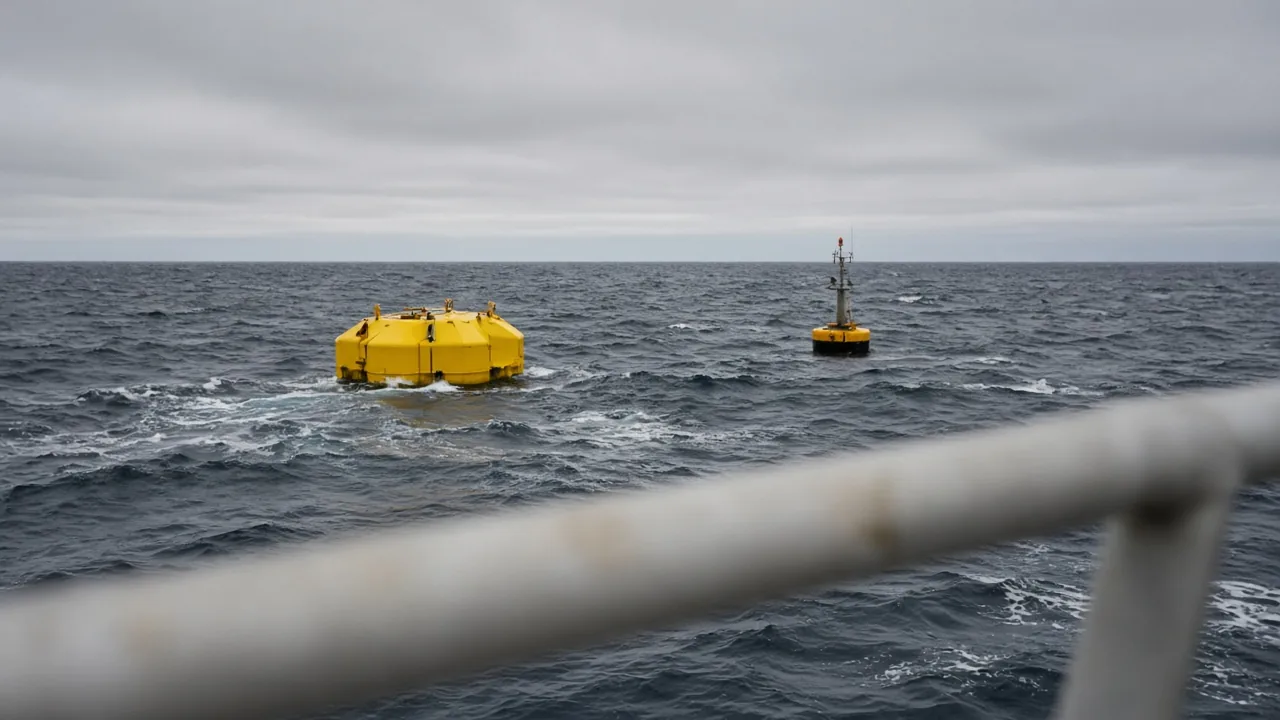
This page was compiled on 12 October 2026 from two Department of Energy documents saved on 11 October 2026. The resource comparison, the phrase “not yet widely deployed,” the open-water test tasks, the six-month to two-year demonstration length, the three topic areas, the PacWave sentence, and the application dates come from the funding notice issued 18 September 2024, “Oceans of Opportunity: U.S. Wave Energy Open Water Testing.” The operating conditions and the four approaches come from “Technology-Specific System Design and Validation,” retrieved 11 October 2026. The photographs are illustrations of generic scenes. They are not project records and they are not measurements. We did not test a device. Who runs this site is on the About page. Every explainer is listed on the articles page.
Takeaway: The figures and the test tasks on this page are quotations from those two DOE pages. Check the pages themselves before reusing a sentence.
Related reading
- Wave energy explained: how waves carry power, and the main converter types.
- Wave energy vs tidal energy: why a wave resource figure is not a tidal resource figure.
- Marine paint for metal: how coating systems are built for steel in seawater.
- Wave energy coverage: the other explainers in this section.