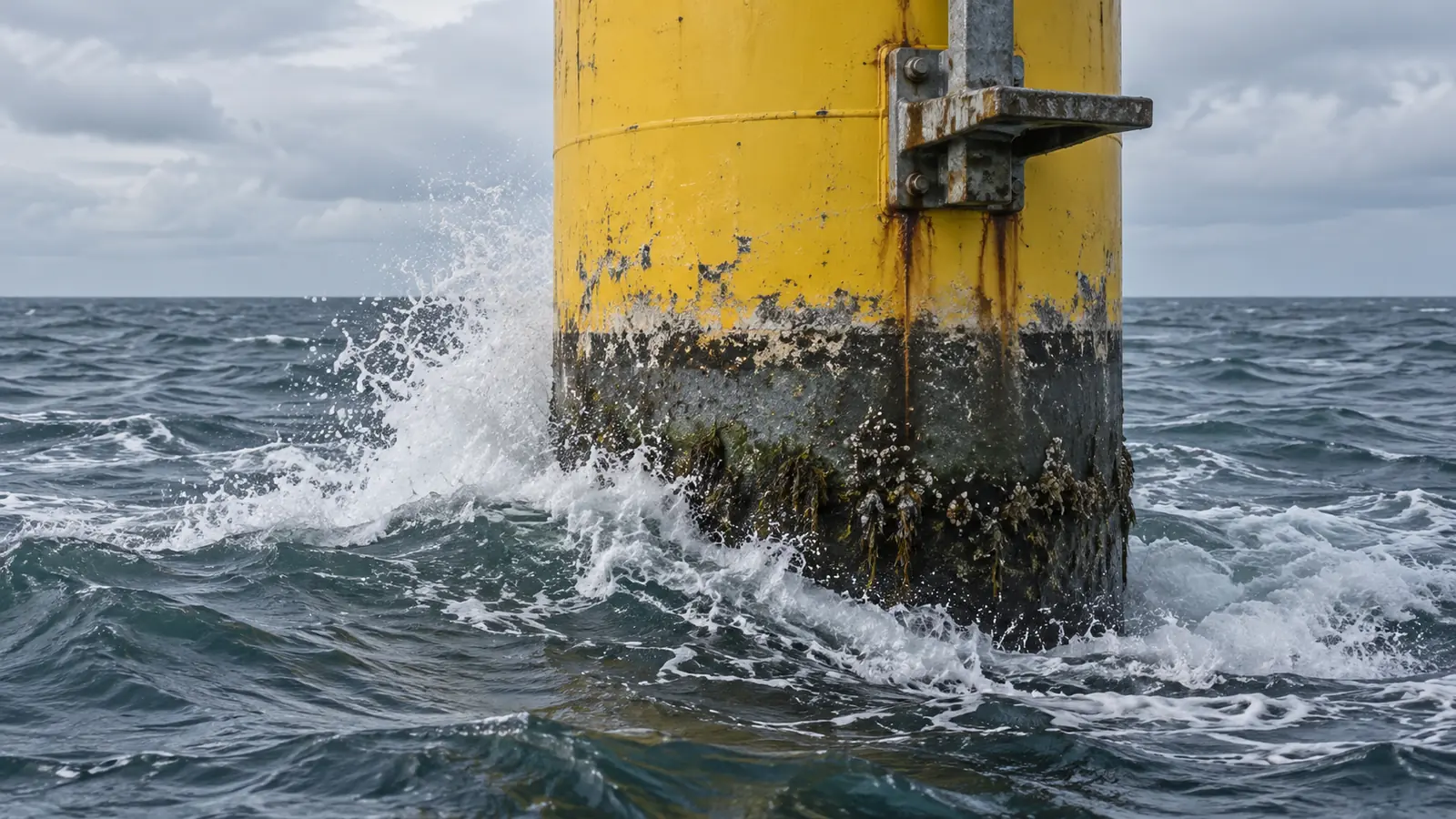
A tin of “marine paint” brushed over rusty steel often fails long before its time, because poor preparation and application cause a large share of early coating failures, whatever the paint. Marine paint protects metal as a system: a primer bonded to clean steel, often zinc-rich so the zinc corrodes instead of the steel, a thick barrier coat that keeps water and salt out, and a topcoat that stands up to sunlight; below the waterline, antifouling coatings and cathodic protection may be added.
Coating systems for steel at sea are chosen against two published scales in ISO 12944: how corrosive the environment is (C1 to C5 and CX for air, Im1 to Im4 for immersion) and how long the coating should last before its first major maintenance (low, up to 7 years, to very high, more than 25 years, in the 2018 edition, as summarized by coating makers AkzoNobel and Hempel). The Federal Highway Administration has estimated that up to 80% of premature coating failures on bridges are partly or wholly caused by poor surface preparation or application, as cited in the Bureau of Reclamation’s 2012 coatings guide.
This explainer is compiled from U.S. government technical guides, standards catalogue summaries and published summaries of ISO 12944. It is written for people who want to understand offshore energy structures and other steel at sea. We do not sell coatings, test products or recommend brands. It is part of our marine materials section.
Quick specs: what decides a marine coating system
| Input or item | Typical value or source | Why it matters |
|---|---|---|
| Exposure zone | Atmosphere, splash and tidal zone, or immersion | Each zone needs a different system, and the splash zone gets the thickest |
| Corrosivity category | C1–C5 and CX (air), Im1–Im4 (immersion), ISO 12944-2 | Sets how aggressive the environment is |
| Durability range | L up to 7 years, M 7–15, H 15–25, VH over 25 (ISO 12944:2018, per AkzoNobel and Hempel summaries) | Time to first major maintenance, used to size the system |
| Primer type | Zinc-rich (galvanic) or barrier primer | Zinc-rich primers protect only on bare, clean steel |
| Dry film thickness (the cured coating, not the wet paint) | ISO 12944-9 minimums: at least 280 µm in CX with a zinc-rich primer, at least 450 µm in the splash zone (as summarized by two coating makers) | Thicker systems slow water and salt reaching the steel |
| Surface preparation | Blast-cleaning grades such as SSPC-SP5 / NACE 1 (white metal) or SSPC-SP10 / NACE 2 (near-white) | FHWA links up to 80% of premature bridge coating failures to preparation or application |
| Cathodic protection (CP) | Sacrificial anodes or an impressed current that make the immersed steel the protected cathode; used with coatings in Im4 | Coatings and CP have to be designed together |
How does marine paint protect metal?
Marine paint protects metal in one of three ways: by blocking water and salt, by chemically slowing corrosion, or by sacrificing a more reactive metal in place of the steel. The Bureau of Reclamation’s coatings guide explains why this works: corrosion needs an anode, a cathode, an electrolyte such as water, and a metallic path, and removing any one of the four stops it.
| Protection type (USBR) | How it works | Examples the guide gives | Limit |
|---|---|---|---|
| Barrier | Separates the steel from the electrolyte | Epoxies, coal tar epoxies, aromatic polyurethanes | Only as good as its thickness and continuity |
| Inhibitive | A slightly soluble pigment forms an inhibitor at the steel | Red lead and chromate primers | These examples are no longer acceptable |
| Galvanic (sacrificial) | Zinc corrodes in place of the steel | Zinc-rich primers, zinc metalizing, galvanizing | Works only when applied directly to bare metal |
Seawater supplies the electrolyte, and the guide singles out chloride as the most aggressive of the soluble salts that can remain on steel and speed corrosion under a coating.
Takeaway: A marine coating works by cutting the corrosion cell, either by blocking water and salt or by giving the corrosion a metal other than the steel to attack.
What does each layer of a coating system do?
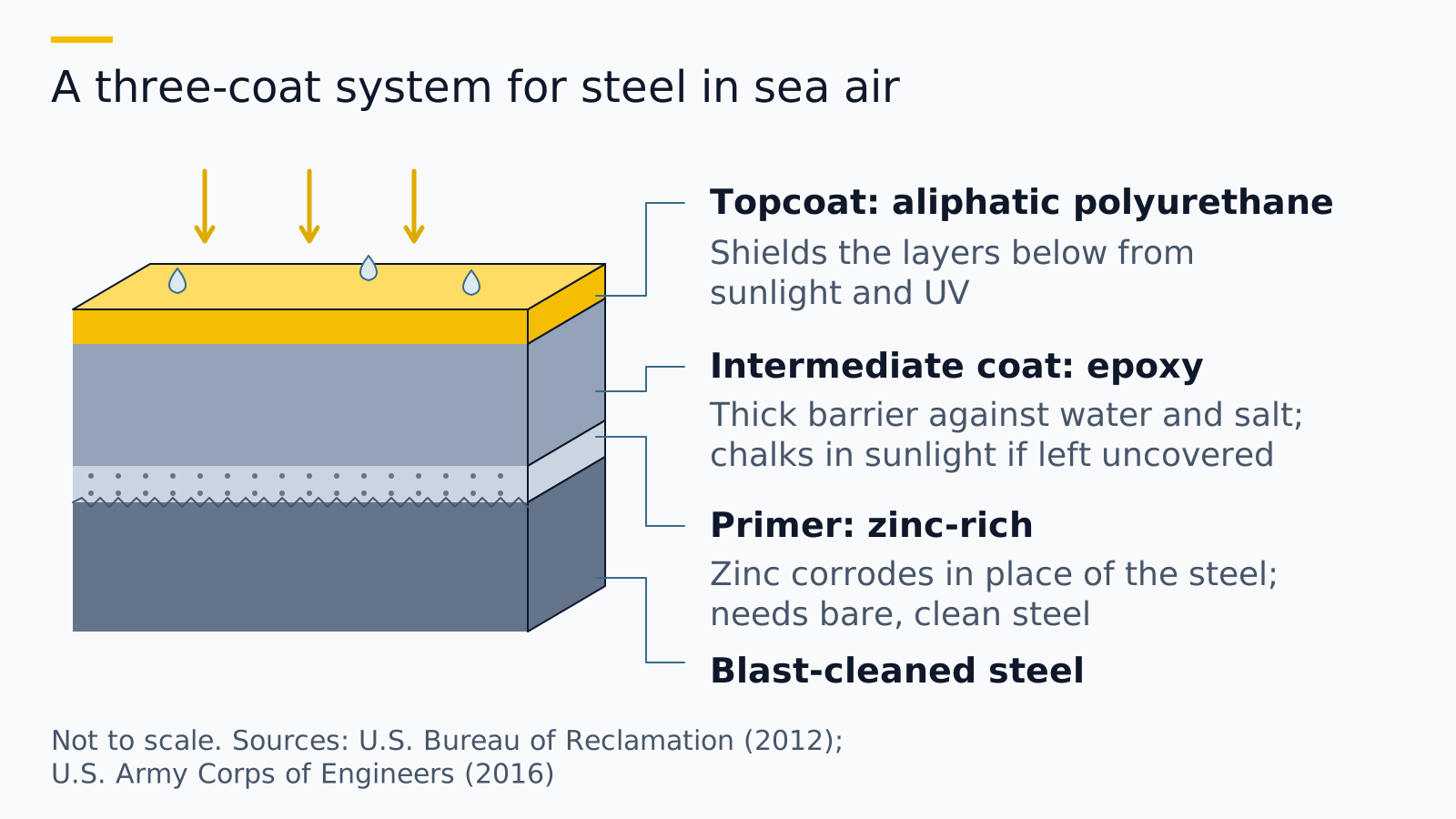
Each coat in a marine system has one main job, and the classic arrangement for steel exposed to air and spray is three coats. The U.S. Army Corps of Engineers describes a system that replaced old lead-based paint as an epoxy zinc primer, an epoxy intermediate coat and a urethane topcoat, and FHWA reports that the coatings industry switched to zinc-based three-coat systems for steel bridges in the 1970s.
| Layer | Typical material | Job | What it is weak at |
|---|---|---|---|
| Primer | Zinc-rich (inorganic or epoxy) | Bonds to blast-cleaned steel; zinc gives galvanic protection | Needs bare, clean steel; the topcoat must suit it to avoid pinholes from out-gassing (USBR) |
| Intermediate (build) coat | Epoxy | Adds thickness as a barrier against water and salt | Epoxies fade and chalk in direct sunlight (USBR) |
| Topcoat | Aliphatic polyurethane | Shields the epoxy from sunlight and UV; gives colour (USBR); urethanes are minimally affected by UV (Army Corps) | Not a substitute for the primer and build coat underneath |
| Below the waterline (where needed) | Antifouling or foul-release coat over an anticorrosive system | Limits marine growth | Different rules and trade-offs; see the antifouling section |
FHWA’s long-running bridge research gives a sense of what this arrangement can achieve on land: studies it cites show zinc-rich three-coat systems lasting up to 30 years before a major touch-up, and its 100-Year Coating Study found that none of the systems tested, including the best three-coat controls, would give 100 years without maintenance.
Common mistake: Treating the topcoat as the protection. The glossy outer coat mostly protects the epoxy from sunlight; the corrosion protection comes from the primer on clean steel and the total film build underneath.
Takeaway: Read a coating specification layer by layer: primer for adhesion and galvanic protection, build coat for barrier, topcoat for sunlight.
How harsh is the environment the steel sits in?
ISO 12944-2 grades the environment, and the grade drives everything else. For air, it defines corrosivity categories by how much metal standard steel specimens lose in their first year; for water and soil, it defines immersion categories. The 2018 revision merged the old marine and industrial C5 grades into C5 for land and added CX for offshore, according to published summaries by AkzoNobel and Hempel.
| Category | Corrosivity | Example environments (summaries of ISO 12944-2) | Steel thickness loss in first year |
|---|---|---|---|
| C1 | Very low | Dry or cold, very low pollution | Up to 1.3 µm |
| C2 | Low | Temperate, low pollution | Over 1.3 to 25 µm |
| C3 | Medium | Temperate with medium pollution, or tropical with low pollution | Over 25 to 50 µm |
| C4 | High | Temperate with high pollution, or tropical with moderate pollution | Over 50 to 80 µm |
| C5 | Very high | Temperate and subtropical with very high pollution and/or significant chloride effects | Over 80 to 200 µm |
| CX | Extreme | Offshore areas, salt spray, extreme industrial areas | Over 200 to 700 µm |
| Im1 | Immersion | Fresh water, such as river installations and hydro plants | Not graded by loss |
| Im2 | Immersion | Sea or brackish water without cathodic protection | Not graded by loss |
| Im3 | Burial | Soil | Not graded by loss |
| Im4 | Immersion | Sea or brackish water with cathodic protection | Not graded by loss |
Steel thickness losses are from the EN ISO 12944-2 table reproduced by Nordic Galvanizers; example environments follow AkzoNobel’s summary of the 2018 edition.
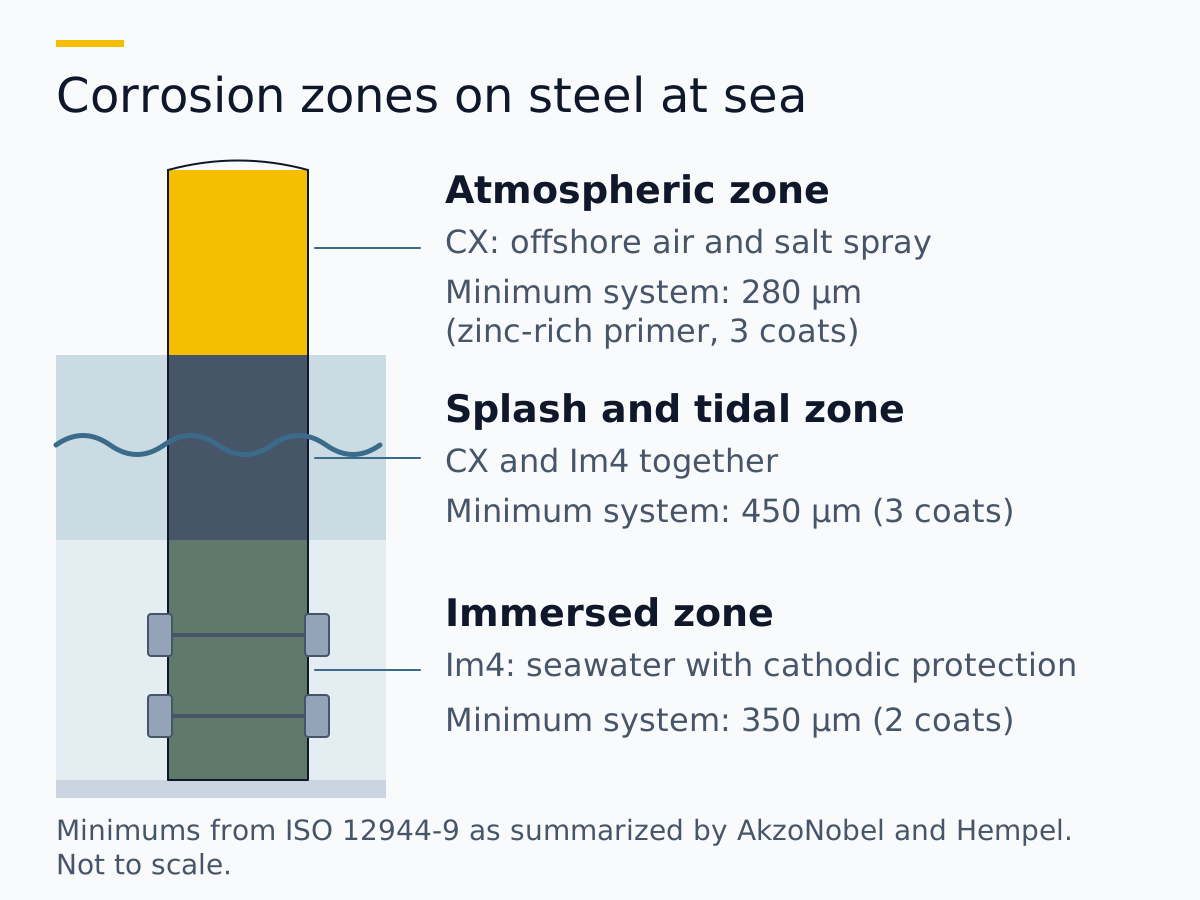
On an offshore structure, these categories map onto zones. The atmospheric zone above the spray is CX, the immersed zone is Im4 when cathodic protection is fitted, and the splash and tidal zone in between is treated as both at once, with its own, thicker minimum system in ISO 12944-9. For offshore wind, DNV’s recommended practice DNV-RP-0416 covers corrosion protection of wind turbines with emphasis on offshore support structures; the offshore wind section explains how those foundations are built, and the wave energy section covers devices that face the same zones.
Takeaway: Find the zone and the category first; a system that suits C4 coastal air is not a system for the splash zone of an offshore foundation.
How long should a marine coating system last?
ISO 12944 answers with durability ranges, the expected time to first major maintenance, rather than a single life. In the 2018 edition these are low (up to 7 years), medium (7 to 15), high (15 to 25) and very high (more than 25), according to summaries published by AkzoNobel and Hempel. Moving to a higher durability range can change the film thickness, the number of coats or the preparation grade, depending on the environment and the coating technology, so each combination has to be checked in the standard’s tables.
For offshore work, ISO 12944-9 sets minimum systems and laboratory tests. For blast-cleaned carbon steel, the AkzoNobel and Hempel summaries give these minimums:
| Zone (ISO 12944-9) | Primer | Minimum coats | Minimum nominal dry film thickness |
|---|---|---|---|
| Atmospheric, CX | Zinc-rich | 3 | 280 µm |
| Atmospheric, CX | Other primers | 3 | 350 µm |
| Splash and tidal (CX and Im4) | Zinc-rich | 3 | 450 µm |
| Splash and tidal (CX and Im4) | Other primers | 3, 2 or 1 | 450, 600 or 800 µm respectively |
| Immersed, Im4 | Other primers | 2 | 350 µm |
The laboratory tests differ by zone. According to Hempel’s summary, CX and splash-zone systems face 4,200 hours (about 25 weeks) of cyclic ageing, while splash-zone and Im4 systems face 4,200-hour cathodic disbonding and seawater immersion tests. These are qualification tests, not a measure of service life. The Norwegian standard NORSOK M-501:2022, written for offshore and coastal facilities, aims its coating systems at the high durability range of ISO 12944-1 with the least possible maintenance, and notes that a coating-friendly design of the steel itself is a prerequisite.
Common mistake: Reading a durability range as a promise. A range is a planning figure for the time to first major maintenance in a given category, not a guarantee that the coating will last that long, and FHWA’s study shows even the best systems need maintenance.
NORSOK M-501’s aim of high durability with minimum maintenance fits how hard offshore steel is to reach: in NREL’s offshore maintenance model, crews and parts travel by vessel, as our comparison of offshore and onshore maintenance explains.
Takeaway: Pick the durability range from how hard the steel is to reach for maintenance, then let the standard’s minimum coats and film thickness follow.
What is the difference between anticorrosive and antifouling paint?
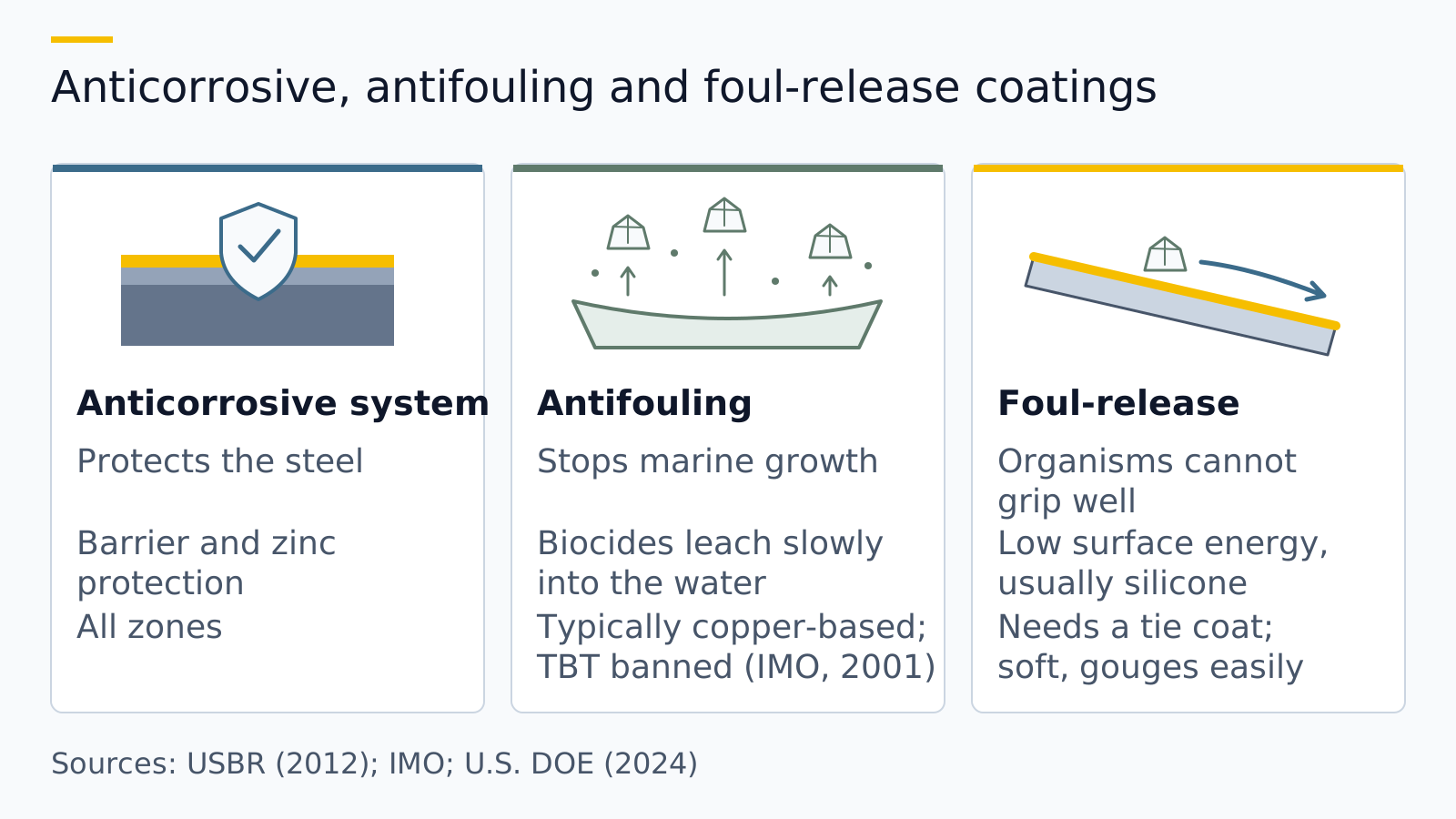
Anticorrosive coatings protect the metal; antifouling coatings protect the surface from marine growth. They often sit together below the waterline, but they work differently and face different rules.
| Feature | Anticorrosive system | Antifouling coating | Foul-release coating |
|---|---|---|---|
| Target | Corrosion of the steel | Sealife such as algae and molluscs attaching (IMO) | Fouling organisms; the USBR guide’s example is freshwater zebra and quagga mussels |
| How it works | Barrier and galvanic protection | Biocides leach slowly into the water (IMO) | Low surface energy and low stiffness so organisms cannot grip well; usually silicone-based (USBR) |
| Where | All zones | Immersed surfaces | Immersed surfaces |
| Environmental concern | Older lead and chromate primers phased out; regulations pushed makers to reformulate (USBR) | Leached biocides persist and harm sea life (IMO); the IMO’s AFS Convention, adopted in 2001, bans harmful organotin compounds such as TBT in anti-fouling systems on ships (some fixed and floating platforms are treated differently); DOE notes antifouling coatings are typically copper-based | Not compared in the sources used here |
| Application limits | Needs bare, clean steel for zinc primers | Applied over the anticorrosive system | Needs a special tie coat; soft and easily gouged (USBR) |
| Works with cathodic protection? | Yes, by design in Im4 | Sits over the anticorrosive system | Sits over the anticorrosive system |
Cathodic protection is the third tool for immersed steel. It makes the steel the cathode of the corrosion cell, either with sacrificial anodes of a more active metal or with an impressed electric current, both named in the Army Corps note. ISO 12944-9 says coating performance should be considered together with the cathodic protection design, and the Army Corps warns that a badly set impressed-current system, run above about 1.4 volts, can blister and destroy coatings; sacrificial anodes do not cause that problem.
The Department of Energy describes the same trade-offs on marine energy devices: anticorrosion paint that has to be reapplied with the device out of service, and copper-based antifouling that can harm wildlife as it dissolves. Our wave energy explainer sets out why those maintenance costs matter for a device’s output.
Takeaway: Treat corrosion and fouling as two problems with two coatings, and design the immersed system together with its cathodic protection.
Why does surface preparation decide whether marine paint lasts?
Because modern coatings are less forgiving than the old lead and high-solvent paints, and anything left on the steel undermines them. The Bureau of Reclamation’s guide cites FHWA’s estimate that up to 80% of premature bridge coating failures are partly or wholly caused by poor surface preparation or application, and lists what has to come off.
| Contaminant (USBR) | What goes wrong if it stays |
|---|---|
| Rust | Porous, holds moisture and salts; expands up to eight times the volume of metal lost and pushes the coating off |
| Mill scale | Eventually breaks loose, taking the coating with it; steel corrodes to protect the scale |
| Soluble salts (chloride the worst) | Draw moisture through the film (osmotic blistering) and speed corrosion under it |
| Grease, oil, dirt, dust | Stop the coating from adhering or forming a uniform film |
| Water or ice | Prevents adhesion; can cause flash rust before coating |
For steel, preparation is specified by joint standards such as NACE 1/SSPC-SP5 (white metal blast cleaning) and NACE 2/SSPC-SP10 (near-white metal blast cleaning). According to Hempel’s summary of the 2018 edition, ISO 12944 also calls for preparation grade P3 under EN ISO 8501-3 (very thorough preparation, free of significant visible imperfections) for high and very high durability systems in C4, C5, CX and all immersion categories.
Takeaway: Budget and inspect preparation as carefully as the paint; a perfect system on salty, rusty steel will not reach its durability range.
The 5-Step Marine Coating Check
Use these five steps to read or question a coating specification for steel at sea. Each step uses one of the scales or rules above; none of them picks a product.
| Step | Question to answer | Where the answer comes from |
|---|---|---|
| 1. Map the zones | Which parts are in air, splash and tidal range, and immersion? | Drawings and site water levels |
| 2. Grade each zone | Which corrosivity or immersion category applies? | ISO 12944-2 (CX and Im4 offshore) |
| 3. Set the durability | When can the first major maintenance realistically happen? | ISO 12944 ranges L, M, H, VH |
| 4. Match a system | Which qualified system meets the category and range? | ISO 12944-5 (C1–C5, Im1–Im3); ISO 12944-9 or NORSOK M-501 (CX, Im4) |
| 5. Specify preparation, inspection and CP | What cleanliness grade, film checks and cathodic protection apply, and who inspects the coating in service, against which criteria, what triggers repair and how the structure is reached? | SSPC/NACE grades, ISO 12944 preparation grades, CP design, the owner’s inspection and maintenance plan |
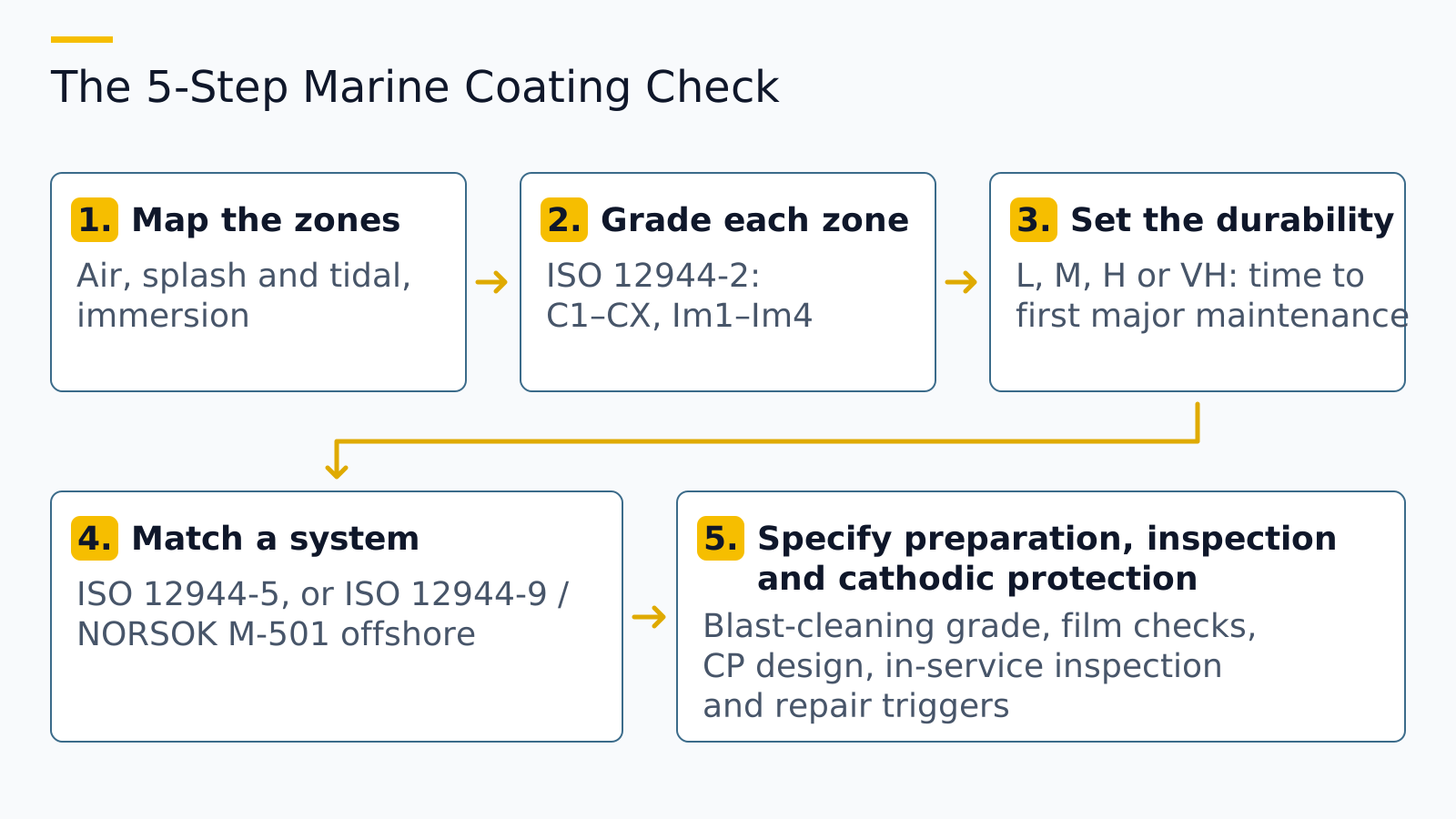
For offshore wind foundations, the same steps sit inside the wider corrosion protection practice of DNV-RP-0416; our comparison of offshore and onshore wind explains why maintenance access at sea makes long durability ranges attractive.
Takeaway: If a coating specification cannot answer all five steps, ask for the missing step before comparing products or prices.
When this does not apply
These scales and systems are written for carbon steel structures in defined environments; several common situations fall outside them.
- Boats and small DIY jobs. Consumer “marine paint” on a hardware shelf may not state an ISO 12944 category. Follow the maker’s system instructions and check whether a product is meant for above or below the waterline.
- Stainless steel, aluminium and other metals. They need their own primers and pretreatment, and DOE notes that duplex stainless steel is sometimes chosen instead of paint on marine energy devices such as wave energy converters.
- Hot or chemical service. According to the Standards Norway catalogue summary, ISO 12944-9 systems cover about −20 °C to +120 °C, and immersed (Im4) systems up to 50 °C; hotter service needs specific evaluation.
- Pipelines and risers. NORSOK M-501 excludes them.
- Product choice. Standards set minimums; a qualified system’s datasheet and the applicator’s procedure decide the details. This site does not rank products, as its About page explains.
Takeaway: Outside carbon steel in standard environments, go back to the coating maker’s system documentation and the structure’s own design basis.
Methods and sources
This page was compiled on October 7, 2026 from public sources: the Bureau of Reclamation’s 2012 Guide to Protective Coatings, Inspection, and Maintenance; the Army Corps of Engineers technical note ERDC/CHL CHETN-IX-43 (2016); FHWA’s 100-Year Coating Study tech brief; Standards Norway catalogue summaries of ISO 12944 parts and NORSOK M-501:2022; the IMO page on anti-fouling systems; a 2024 Department of Energy article; and DNV’s catalogue page for DNV-RP-0416. We could not open the ISO text itself, so category, durability and film-thickness figures are taken from published summaries by Nordic Galvanizers, AkzoNobel and Hempel, which agree on the categories, durability ranges and minimum film thicknesses quoted here; they are used only for what the standard says, not for any product. We did not test any coating. Who runs this site is set out on the About page, and every explainer is listed on the articles page.
Takeaway: Check the current edition of ISO 12944 and NORSOK M-501 before using any figure here in a specification.
Related reading
- Offshore vs onshore wind — Why maintenance at sea costs more, and where corrosion protection fits in the comparison.
- Wave energy explained — How wave devices work and why seawater makes them hard to keep running.
- More marine materials explainers — Every article in this section.